Builders and construction companies have received good news to start the year, with a healthy quarterly update from the New Zealand Infrastructure Commission.
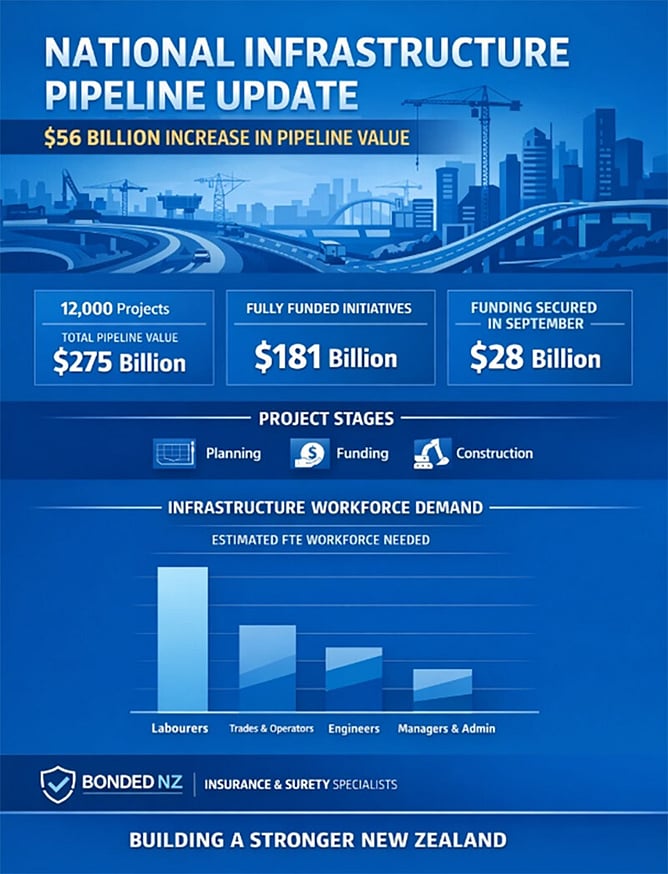
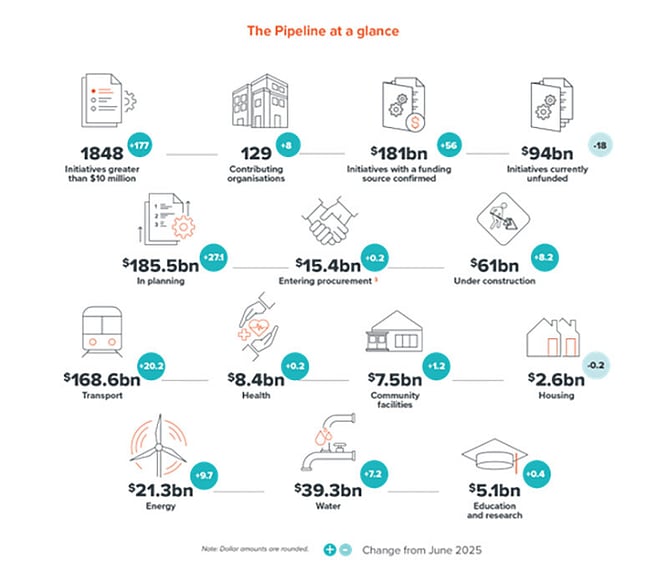
According to its September reports, the National Infrastructure Pipeline now includes nearly 12,000 infrastructure projects worth a total of $275 billion. It also estimates the total expected cost of initiatives with committed funding or a funding source as $181 billion.
Additionally, the value of fully funded initiatives increased by $16.1 billion. $10.9 billion of this is attributed to projects in the Pipeline that have moved from the planning stage to firm funding commitments. In total, $28 billion in initiatives changed funding status from having no confirmed funding source in June to having a confirmed funding source in September.
The figure below shows a snapshot of the report.
An Independent View of Infrastructure Projects
The Pipeline is a regular source of quarterly updates that covers current and future infrastructure projects from the central government, local governments, and the private sector. It includes national work in transport, water, education, health, housing, and other areas.
Infrastructure Minister Chris Bishop states that the report provides a critical, independent assessment of the projects that are currently happening, and will happen, in New Zealand.
“Good infrastructure planning relies on good information. The more comprehensive the Pipeline becomes, the more value it delivers – helping to grow the economy, support jobs, and lift productivity across New Zealand.
“We’re seeing projects advancing, information improving, and the total value of infrastructure initiatives in the Pipeline climbing to $275 billion, up from $237 billion in June this year,” he says.
The pipeline shows initiatives for projects and programmes at various stages of planning, funding commitment, and delivery. These include fully funded initiatives and those in the early stages of funding.
According to Penk, the September quarter numbers are valuable in informing the country’s National Infrastructure Plan.
“At the end of September this year, there were $61 billion of infrastructure projects under construction, and another $20 billion progressing through planning and scheduled to start construction in the next 12 months,” Mr Bishop says.
“These early-stage initiatives matter too. They help signal future demand, highlight market constraints and opportunities, and support workforce planning. A more complete Pipeline is better for everyone – from councils and contractors to central government agencies.
“This growth reflects better reporting, more initiatives being captured, and improved information quality. A clear view of both committed investments and the large set of options that may seek funding is vital for good decision-making,” Mr Bishop says.
“The September update will also inform the final stages of the National Infrastructure Plan, which will provide forward guidance on a sustainable investment path for infrastructure, highlight large unfunded Pipeline initiatives, and set out recommendations to improve system performance.
“The Pipeline is steadily moving toward a more complete picture of regional and sectoral infrastructure activity, although there is still room for improvement.”
Understanding the Workforce Needed
Around one third of the construction workforce is employed in the infrastructure sector. The figure below shows the projected infrastructure full-time equivalent (FTE) workforce required to deliver the Pipeline initiatives.
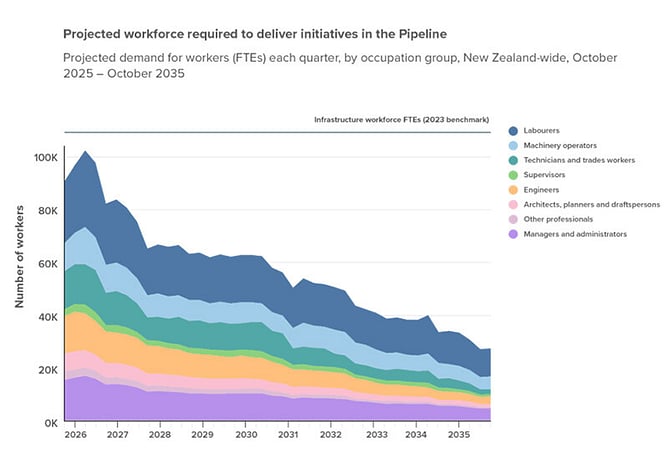
Using a 2023 benchmark for the estimated workforce supply as a reference, the data show continued progress on all jobs. Labourers record the most demand, while managers and administrators record the least.
The report notes that these projections will continue to evolve as the pipeline and workforce demand undergo changes.
Key Takeaway
The Pipeline shows stability and future growth for infrastructure projects in New Zealand. Builders and construction companies should engage in proactive hiring strategies to ensure their workforce remains competitive, and secure themselves with the right insurance to mitigate potential project risks.
Bonded NZ helps builders and contractors find the best insurance, warranties, and surety bonds that keep their best interests in mind. Whether it's a big or small project, our cost-effective options help them secure their projects at every angle.
For more information about our services, contact our team today.